The holiday shopping season is one of the most important times of the year for many businesses. And it’s coming up fast!
Customers are ready to buy. And everyone is competing for their business.
Marketing budgets increase. Advertising campaigns get bigger. Promotions become more aggressive.
And all of that investment has one thing in common:
It has to get people to a website.
But getting someone to your website is only half the job.
What happens when they get there?
If the most important content is slow arriving, page elements move around as the user tries to click, or that click takes too long to respond, your carefully planned marketing journey can suddenly become frustrating.
And frustrated shoppers don’t wait, they leave.
Customers may not know it, but they care about Web Performance
Your users probably don’t know what poor Web Performance is, but they definitely know what a poor user experience is.
- Users see a blank or incomplete page and wonder, “Is something broken?”
- Something moves just as they’re about to click it and they wonder, “What just happened?”
- They tap a button and nothing seems to happen, so they wonder, “Did that work?”
These moments may seem small individually.
But during a major shopping campaign, they can affect thousands or millions of customer journeys.
When Marketing delivers the customers, but the customers find a problem
Consider this ideal holiday campaign:
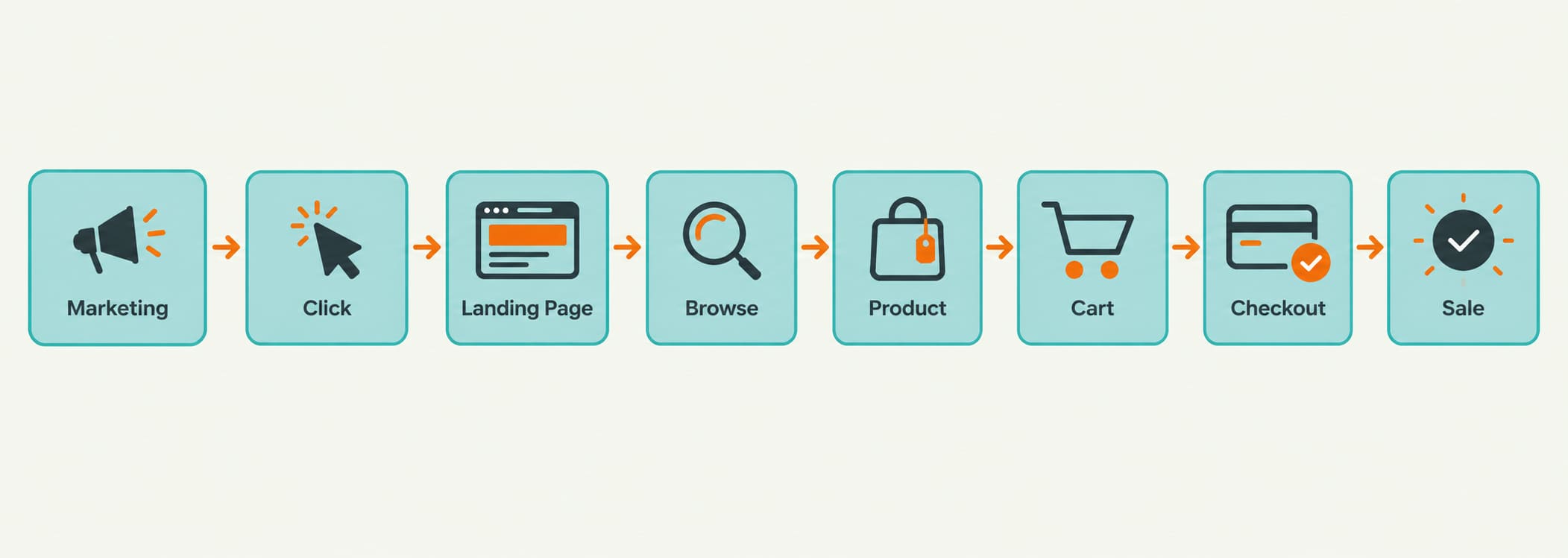
Your marketing team can do everything right. The campaign can generate impressions, clicks, traffic, engagement, and attention.
But if all that attention lands on a website that causes friction, your investment is working against itself.
You paid to bring the customer to the door. Your website has to get them through it.
This is particularly important during the holidays, when promotional campaigns can dramatically increase traffic, and customers are comparing multiple retailers at the same time.
A frustrating experience doesn’t necessarily lead to a complaint. Shoppers simply take their money elsewhere.
Web Performance is part of the sales funnel
Web performance is often treated as a technical concern, belonging to engineering.
But for ecommerce, it is also a customer experience and revenue concern.
That doesn’t mean every page needs to be perfect. In fact, trying to optimize everything can be a poor use of time and money.
The question to ask is:
Is poor performance creating any meaningful friction in the customer journey?
The answer may point to a problem that is shared across hundreds of pages, or it may point to a slow product image, an unstable promotional banner, or a delayed “Add to Cart” reaction.
These issues can often be identified through real-user performance data and then prioritized according to their potential business impact.
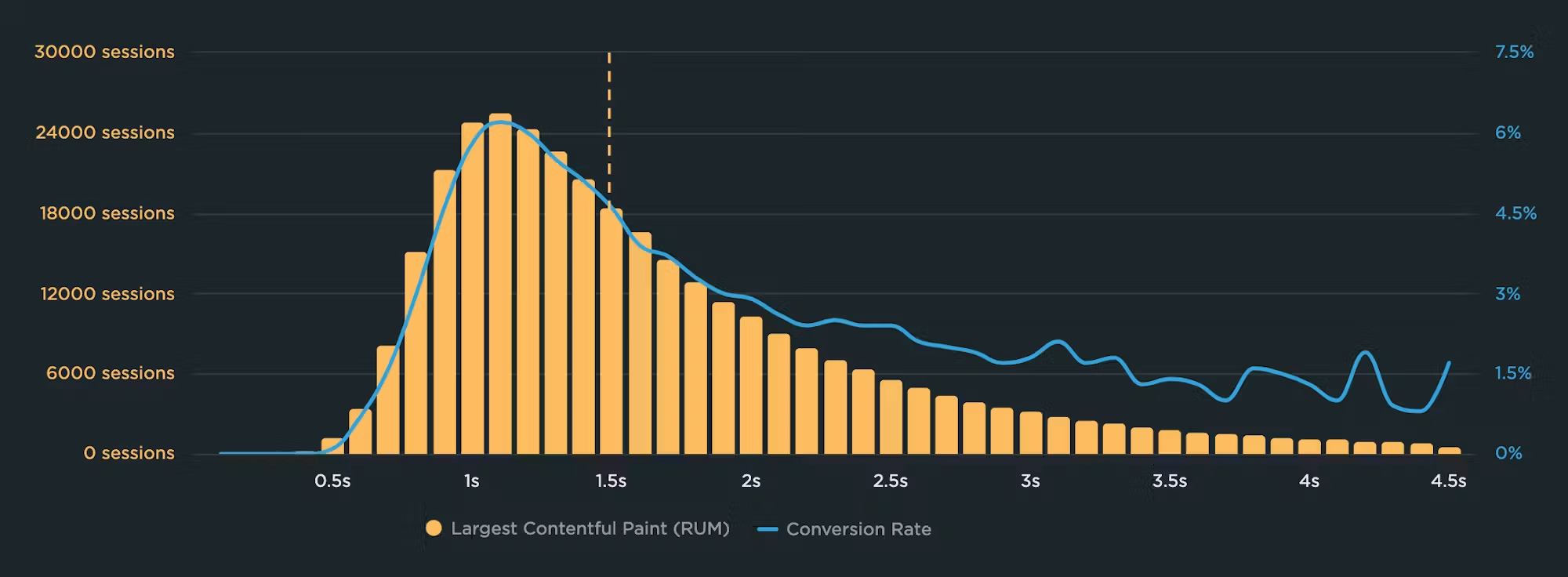
This is especially valuable before a major holiday campaign launches.
Don’t let your website waste your marketing investment
Your marketing team is responsible for creating demand.
Your website is responsible for turning that demand into an experience that leads to a sale.
Web Performance sits directly between the two.
The good news is that web performance problems are measurable. They can be identified, investigated, prioritized, and monitored.
And you don’t necessarily need to rebuild an entire website to make a meaningful difference.
Sometimes the biggest opportunities are relatively small changes affecting a large number of customer journeys.
Find Your Biggest Web Performance Opportunities
Your marketing campaign should get customers to the door. Make sure that door is easy to walk through.
Before the holiday traffic arrives, find out whether your website is creating unnecessary friction for your customers.
My Web Performance Assessment uses real-user performance data, Core Web Vitals, and a targeted investigation to identify the that issues are most worthy of your attention. Rather than treating every web performance problem equally, I prioritize the opportunities that can have the greatest potential impact for your business.
Know where to invest your performance budget before you spend it.
Learn more about Web Performance & Optimization →
What’s next?
In the next articles in this series, we’ll move from why web performance matters to how to recognize and identify web performance issues.
We’ll discuss the three Core Web Vitals in plain English:
- LCP: Is the important content appearing quickly enough?
- CLS: Is the page staying where the customer expects it to be?
- INP: Does the website respond when the customer interacts with it?
And we’ll go over performance monitoring, so you can see if the issues you fixed worked, and make sure you know if they start coming back!
With this information in your hands, you will not only understand web performance issues, you will be able to recognize them and understand how they affect your customer journeys.
And after that, if you’re interested, I can help you find and fix any issue you currently have, and prevent future issues before they happen!